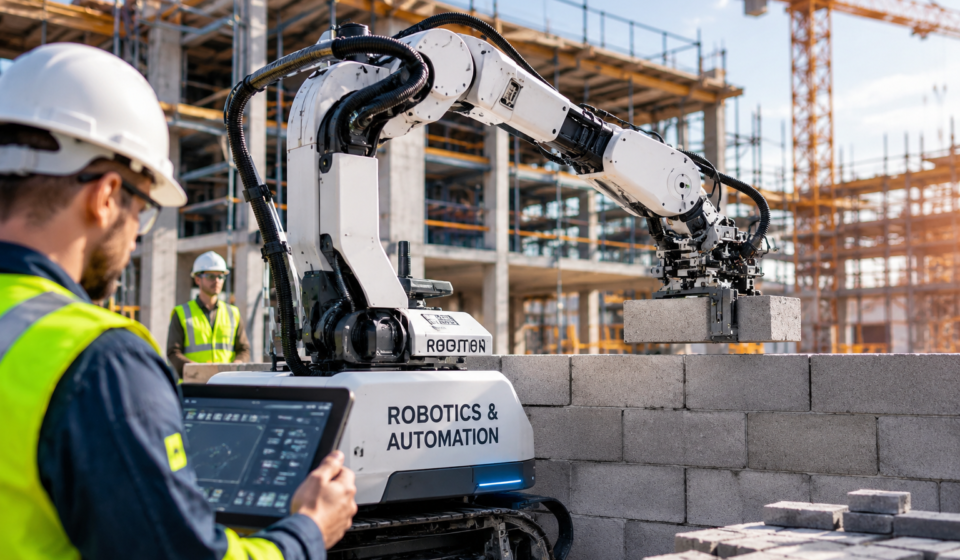

How Technology Is Changing Construction in 2026
Technology is transforming the construction industry faster than ever. From artificial intelligence and robotics to Building Information Modeling (BIM), drones, 3D printing, and smart building systems, modern technology is helping construction companies improve efficiency, reduce costs, increase safety, and deliver projects faster.
In 2026, construction technology is no longer simply an optional advantage. For many contractors, developers, architects, and project managers, adopting the right digital tools has become an important part of staying competitive.
This article explores the biggest ways technology is changing construction in 2026 and what the future may look like for the industry.
1. Artificial Intelligence in Construction
Artificial intelligence (AI) is one of the most important technologies affecting construction in 2026.
Construction companies can use AI-powered systems to analyze project information, identify potential problems, estimate costs, improve scheduling, and support decision-making.
For example, AI can analyze historical project data and help project managers identify risks that could cause delays. AI tools can also assist with estimating materials and predicting potential cost increases.
Benefits of AI in construction
- Better project planning
- Faster data analysis
- Improved cost estimation
- Early identification of project risks
- More efficient scheduling
- Improved decision-making
AI does not replace the expertise of construction professionals. Instead, it can help workers and managers make better use of the information available to them.
2. Building Information Modeling (BIM)
Building Information Modeling, commonly known as BIM, has become an essential digital technology for many construction projects.
BIM creates a detailed digital representation of a building or infrastructure project. Architects, engineers, contractors, and other professionals can use the model to coordinate their work before and during construction.
One major advantage of BIM is that it can help identify design conflicts before they become expensive problems on the construction site.
For example, if electrical systems and plumbing are planned in the same location, a BIM model can help teams identify the conflict before installation begins.
Why BIM matters
BIM can improve:
- Design coordination
- Project communication
- Cost management
- Scheduling
- Clash detection
- Construction planning
As construction projects become more complex, digital collaboration through BIM can become increasingly valuable.
3. Drones Are Improving Construction Site Monitoring
Drones are another technology changing construction in 2026.
Instead of relying entirely on workers to inspect large construction sites manually, companies can use drones to capture aerial images and videos.
Drones can help teams monitor project progress, survey sites, inspect difficult-to-reach areas, and document construction activities.
Regular drone images can also provide project managers with a visual record of how a project is progressing.
Advantages of construction drones
- Faster site surveys
- Aerial project monitoring
- Progress documentation
- Improved inspection capabilities
- Reduced need for workers to access certain difficult areas
Drones can save time while providing construction teams with useful visual information.
4. Robotics and Automation
Robotics is gradually becoming more important in the construction industry.
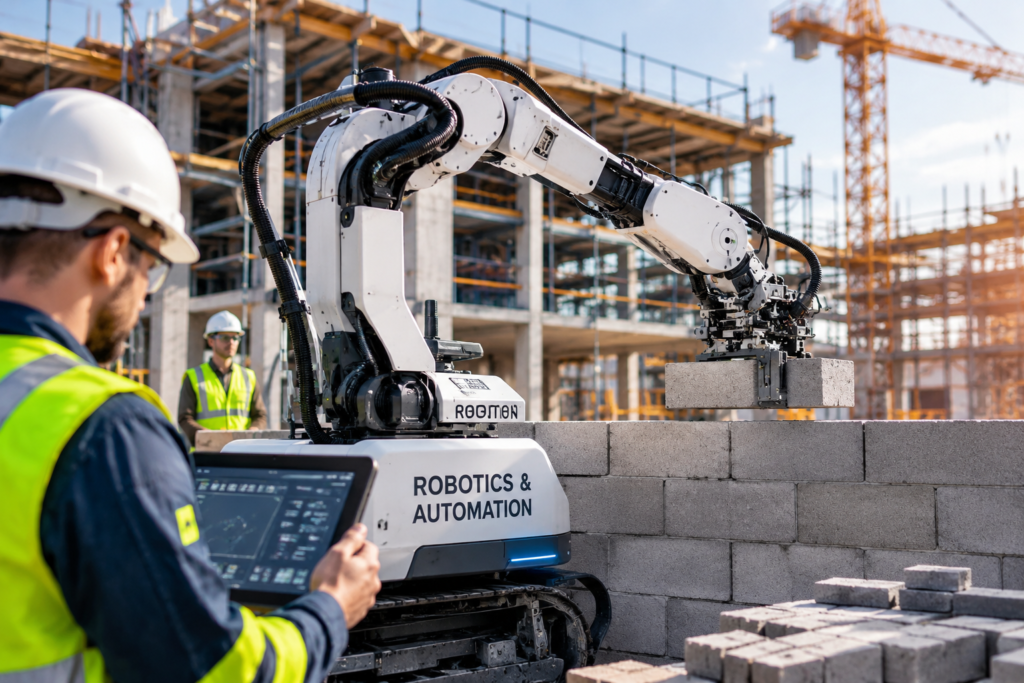
Automated machines and robotic systems can perform certain repetitive or physically demanding tasks. Depending on the application, these technologies can assist with activities such as layout, material handling, bricklaying, concrete work, and site preparation.
The goal is not simply to automate everything. Instead, robotics can help construction companies handle repetitive work while allowing skilled workers to focus on tasks requiring experience, judgment, and problem-solving.
As robotic technology continues to develop, construction sites may become increasingly automated.
5. 3D Printing Is Creating New Construction Possibilities
3D printing is opening new possibilities for construction.
Large-scale 3D printers can create certain building components by depositing material layer by layer. Some companies and research organizations are also exploring 3D-printed structures and housing.
Potential benefits include reduced material waste, faster production, and greater design flexibility.
However, 3D printing is not suitable for every construction project. Regulations, materials, equipment costs, engineering requirements, and project conditions must all be considered.
Nevertheless, the technology represents an interesting direction for the future of construction.
6. Internet of Things (IoT) and Connected Construction Sites
The Internet of Things, or IoT, connects physical devices to digital systems so they can collect and exchange data.
On a construction site, IoT technology can be used with equipment, vehicles, sensors, tools, and other assets.
For example, sensors can monitor equipment conditions and provide information that helps companies identify maintenance needs.
Connected devices can also provide information about environmental conditions, equipment utilization, and site activity.
How IoT can help construction companies
- Equipment monitoring
- Asset tracking
- Predictive maintenance
- Environmental monitoring
- Improved site visibility
- Better resource management
Connected construction sites can give project managers more information without requiring manual monitoring of every activity.
7. Digital Twins for Better Project Management
A digital twin is a digital representation of a physical asset or system that can be connected to real-world data.
In construction and building management, digital twins can help teams understand how a building or infrastructure asset is operating.
During the project lifecycle, digital information can potentially continue to provide value after construction is completed.
For building owners, this can support maintenance, monitoring, and long-term asset management.
Digital twins are therefore helping connect construction with the operational life of a building.
8. Augmented Reality and Virtual Reality
Augmented Reality (AR) and Virtual Reality (VR) are also becoming useful tools for construction professionals.
VR can allow teams to explore a digital building model before construction begins. This can help clients and project teams understand the design in a more immersive way.
AR can overlay digital information onto the physical environment. Workers may be able to use AR devices to view instructions, measurements, or other project information while working.
These technologies can improve visualization and communication between project stakeholders.
9. Cloud-Based Construction Management
Construction projects generate enormous amounts of information, including drawings, schedules, contracts, reports, photographs, inspection records, and financial data.
Cloud-based construction software allows project teams to access and share information from different locations.
Instead of relying entirely on physical documents or disconnected systems, teams can work from a shared digital environment.
Benefits of cloud construction software
- Easier document sharing
- Real-time collaboration
- Better project organization
- Remote access to project information
- Faster communication
- Improved data management
For companies managing multiple projects, cloud technology can make collaboration considerably easier.
10. Technology Is Improving Construction Safety
Construction remains a physically demanding industry, so safety is one of the most important areas where technology can make a difference.
Wearable devices, sensors, drones, cameras, and digital monitoring systems can provide additional information about site conditions and worker activity.
Technology can also support safety training through virtual reality simulations, allowing workers to practice responding to certain workplace situations in a controlled digital environment.
Technology does not eliminate construction risks, but it can provide additional tools for identifying and managing them.
11.
How Technology Is Changing Construction in 2026
Sustainability is another major driver of construction innovation.
Technology can help companies reduce waste, improve energy efficiency, select materials more effectively, and monitor building performance.
Digital design tools can help teams evaluate different materials and systems before construction begins. Smart building technologies can also help buildings manage energy use after completion.
Low-carbon materials, efficient building systems, renewable energy technologies, and improved construction processes are all contributing to the development of more sustainable buildings.
12. Smart Buildings Are Changing the End Product
Technology is not only changing how buildings are constructed—it is changing the buildings themselves.
Smart buildings can use sensors and connected systems to monitor factors such as lighting, temperature, energy consumption, and occupancy.
Automated systems can then respond to changing conditions.
For example, smart building technology can help manage lighting and heating or cooling based on building usage.
This means construction companies increasingly need to think about both the physical structure and its digital infrastructure.
The Future of Construction Technology
The construction industry is moving toward a more connected, automated, and data-driven future.
AI, BIM, drones, robotics, IoT, digital twins, cloud platforms, AR, VR, and sustainable technologies are not isolated innovations. They can work together to create a more connected construction process.
For example, a future project could combine BIM for digital design, AI for risk analysis, drones for site monitoring, IoT sensors for equipment tracking, and cloud software for collaboration.
The companies that learn how to combine these technologies effectively may have an important advantage in a competitive construction market.
Challenges of Adopting New Construction Technology
Despite the benefits, technology adoption also comes with challenges.
Construction companies may need to invest in new software, hardware, training, cybersecurity, and employee development.
Workers may also need time to learn new systems and adapt to changing workflows.
Another challenge is making sure different technologies can communicate with each other. A company may use multiple software platforms, and poor integration can create additional work rather than reducing it.
Successful technology adoption therefore requires more than purchasing new equipment. Companies need a clear strategy, proper training, and ongoing support.
Conclusion
Technology is changing construction in 2026 by making projects more connected, data-driven, efficient, and innovative.
Artificial intelligence can support decision-making, BIM can improve coordination, drones can monitor sites,
How Technology Is Changing Construction in 2026
robotics can automate selected tasks, and IoT devices can provide valuable real-time information.
At the same time, sustainable technologies and smart building systems are changing what modern buildings can achieve.
The future of construction will not be based on technology alone. Skilled professionals will continue to play an essential role. The biggest opportunity is to combine human expertise with digital tools to create safer, more efficient, sustainable, and higher-quality construction projects.
For construction companies, the key question is no longer whether technology will change the industry. The question is how effectively they can use it.